
Part 1: Somatic Awareness, Coaching and How We Learn
There’s an adage in the ski world that “you learn how to ski in the summer, and how to (______) in the winter.” From weekend warriors to masters and professional competitors, avid skiers young and old frequently fill the absence of skiing with mountain biking, paddling, golf, soccer, climbing, and more.
Because skiing skills transfer to learning our summer endeavors, summer activities enhance our skiing—and vice versa. Of course, endeavors from sports to music, art, and dance intertwine to fuel each other any time of the year. Summer happens to be when I’m available to engage in other gravity-fed sports, like mountain biking.
Nevertheless, this summer I chose another focus: rest.
I finally paid attention to my body’s signals and redefined self-care to include, believe it or not, myself.
The impact of what transpired is still unfolding, including this revelation: rest, and for that matter sleep, requires the body to keep moving.
To provide context for this and other revelations, read here as I share my learnings attained through Newfield Network’s Somatics Course.
A Summer of Rest
While my body needed rest, I still itched for learning—including learning how to rest and restore.
When Newfield Network first described the Somatics course focus in 2024, I recognized that it not only provided “new material”; it affirmed my lived experience as a lifelong athlete and coach. And musician, mom, friend, lover—it covers it all.
This affirmation hadn’t existed in 2008–2013 when I first certified in Newfield’s Foundations Course. Whether it was because I didn’t have the language to depict my observations to course attendees and leaders, or they didn’t yet have the capacity to receive it—or both—I graduated feeling something was missing.
Nevertheless, I recognized that the Newfield approach to making meaning of our lives, called ontology, had deepened my ability to meet others where they want to be met, both on the slopes and off.
While I didn’t register for Somatics in 2024, I continued examining the why and how we know what we know, which influences how we make meaning in life.

What Is Somatic Awareness?
The word “Soma” referring to “body living in its wholeness”, has gone through several iterations. Plato, challenged the concept of human oneness. He argued the material body was deceitful, and distinct from soul, closely linked to the “mind” which was immortal and capable of grasping eternal truths. The mind, specifically located in the “brain”, beckoned the inferior body to transport it from place to place. The inferior body was considered to need taming from sensual needs and desires, sex and food included, and to submit to the higher level pursuits of the mind, which intimately connected to an immortal soul. Mind and soul interacted to create personhood which in the quest for wisdom, was potentially eligible for eternal spiritual union with the divine.
The French philosopher, and “father of modern psychology”, Renee Descartes, evolved the dualistic conception of mind and body separation which conditioned the beliefs of western society, including science, religion, education, medicine, government, human development, gender roles, etc. Although now proven scientifically incorrect, residual Cartesian concepts continue to influence ontology, “how we know what we know.”
While my lived experience proved a dualistic definition of personhood just didn’t fit, I recognized how I had been influenced by this duality, to the degree that I allowed it to invalidate my professionalism as a ski pro as “not a real job.” Skiing involves physicality, which by definition is “inferior” to cognition, therefore not worthy of legitimacy of being a “real job.” I did it anyway.
Now Somatics includes awareness of how the interior and exterior experience of physicality continually interact to influence and inform states of human “being”, including breathing, moving, resting, sensation, thoughts and emotions. Somatic encompasses the oneness of the mind, brain and body. As Guy Glaxton discusses in his book “Intelligence in the Flesh”, practical, embodied intelligence is the deepest, oldest and most fundamental and more important intelligence of the lot, and the others – emotional intelligence, practical intelligence, bodily-kinesthetic, along with a host of other intelligences – are aspects or outgrowths of this basic, bodily capability.”
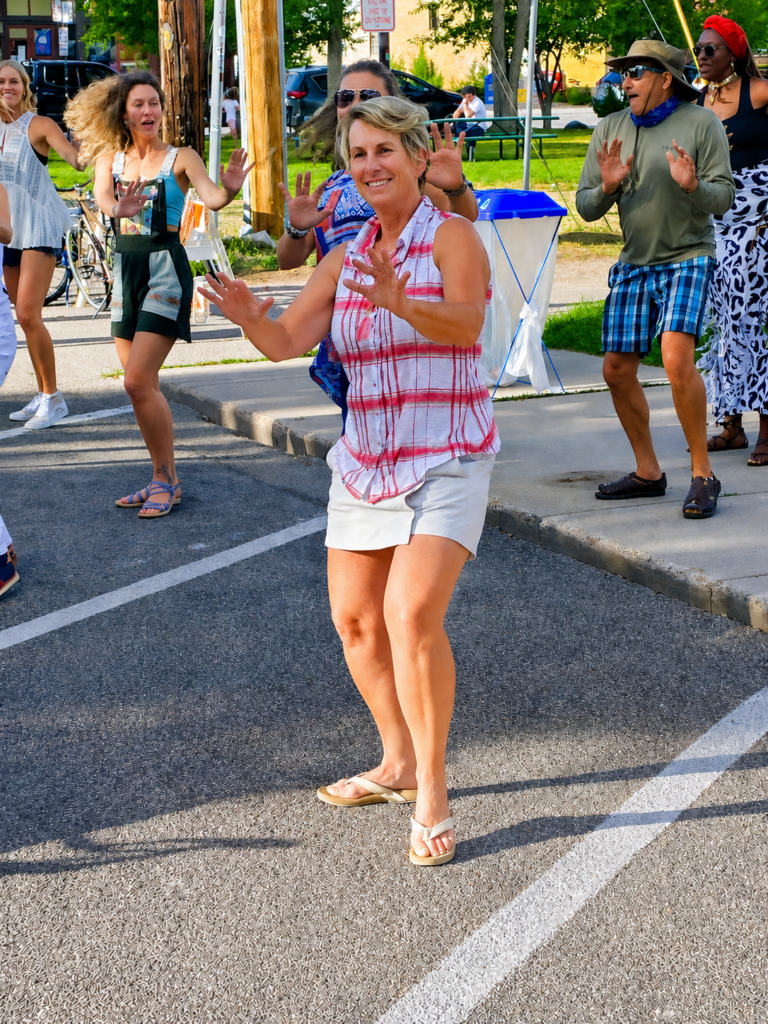
Let me express gratitude here for the human potential of lifelong learning, because this learning—along with affirming what I intuited all along—definitely entails a deep dive!
From Mind Over Body to Embodied Intelligence
Back to resting.
Thanks to a summer of prioritizing rest—my first in decades—I was able to immerse myself in Newfield Network’s Applied Somatics Coaching Certification.
Immersing with adept life coaches in practical learning sessions several days a week for five months became an oasis in life.
It provided the language and structures to clarify and transform my professional coaching and personal experiences as I interacted with clients, family, and friends in various work-life environments.
With continued practice, living is less tiresome and more restorative.
What has been intuitive is also becoming palpable.
Historically, learning sports was dominated by a paradigm based in the belief that the brain is where intelligence exists and rules all. The coach—who cognitively “knew more”—commanded the learner to conform to both a specific technique and a way of learning that technique. The coach was the expert, not just about his area of expertise, but about how others should engage with it regardless of background, age, gender, profession, race, or ethnicity. It tended to exclude those who didn’t or couldn’t conform for a variety of reasons. As a developing professional, I felt I was being assessed with that traditional filter and also had to adhere to it to attain professional status.
Though tinged by this filter, what I actually did while coaching was different.
What the Body Can Teach Us About Coaching
As the concept of the “universal athlete” evolved, it became globally understood across many specialties and areas of social interaction that there is value in meeting each person where they want to be met—a place from which people are most likely to succeed.
Early examples of success included Phil Jackson’s cutting-edge method of coaching a diverse team of athletes with the Chicago Bulls and Los Angeles Lakers, and Tony DiCicco’s coaching of the U.S. Women’s Soccer team to World Cup victory at the Rose Bowl in 1999. Rather than ordering athletes and learners exactly what and how to do something, non-judgmental inquiries were made into the athletes’ motivation for learning, personal history, physical abilities, preferences, and desired outcomes. The learners were coached accordingly and permitted to resource their inherent wisdom to imprint elite athleticism on the road to success.
Still, as coaches—including myself—who grew up being coached with a more command-style approach demanding conformance, it took consistent mindfulness not to coach as we were coached.
Instead, I had to embrace the concept of the universal athlete rather than being an “expert” in all things. What I realized is this: Listen long enough, and the learner will tell you exactly what they need.
Humbly learning new things myself became a pathway to break from command style and become curious about multiple ways to learn because I could better identify with the learner. It is clear that while I may be an expert in the world of skiing, it’s imperative to respect my guest as an expert in themselves. To co-create with my guests an enjoyable and effective experience, I need to observe how to make inquiries that unleash my guests’ potential.

From the Universal Athlete to the Whole Person
When Newfield Network’s Somatics Life Coaching Course showed up this summer, I felt I had finally found a new portal to make distinctions in a physical realm in which I readily engage. It’s also exciting that there is so much more to learn. Along the way, I was introduced to many concepts, including—but not exclusively—Guy Claxton’s Intelligence in the Flesh, Ken Wilber’s Theory of Everything, J. Les Fehmi’s Open Focus, and the work of Carol Dweck On Mindset, John Searle’s Chinese Room argument, Bessel van der Kolk’s The Body Keeps the Score, and Julio Olalla’s work on language, knowledge, and wisdom. (See below for links)
These ideas have given me new language for something I have experienced throughout my life: the body and mind together inform how we learn, think, feel, perform, recover, and relate.
As an athlete, coach, mother, musician, friend, and human being, these details matter.
It transforms how I learn.
It transforms how I coach.
And perhaps most importantly, it transforms how I rest.
Making Space for Meaning
In a nutshell, a summer of rest is making space for meaning.
This is the first of six reflections on how somatic awareness can improve the way we move, learn, rest, and live. I look forward to continuing the exploration with you in my next blog and check out my previous posts HERE.
This is the first of six reflections on how somatic awareness can improve the way we move, learn, rest, and live. I look forward to continuing the exploration with you in my next blog and check out my previous posts HERE.
Ideas That Shaped My Learning
Guy Claxton, Intelligence in the Flesh
Ken Wilber, A Theory of Everything
J. Les Fehmi, Open Focus
Carol Dweck, Mindset
John Searle, The Chinese Room
Bessel van der Kolk, The Body Keeps the Score
Julio Olalla — language, knowledge, and wisdom
Guy Claxton, Intelligence in the Flesh
Ken Wilber, A Theory of Everything
J. Les Fehmi, Open Focus
Carol Dweck, Mindset
John Searle, The Chinese Room
Bessel van der Kolk, The Body Keeps the Score
Julio Olalla — language, knowledge, and wisdom
Did this blog resonate with you? Please share by leaving a comment below!
2 responses to “Lessons from a summer of rest”
-
Lots of food for thought there, and a piece that might bear a second read.
-
Apropos!
More next month….
-


2 Responses
Lots of food for thought there, and a piece that might bear a second read.
Apropos!
More next month….